

Rise Pet Health Tibial Plateau Leveling Osteotomy (TPLO) for Dogs in Orange County, CA
Cranial Cruciate Ligament Tears in Dogs
The cranial cruciate ligament (CCL), similar to ACL in people, is an essential part of stabilizing your dog’s knee and supporting movement. A tear in this ligament causes inflammation, pain and limits your dog's mobility. CCL tears can occur suddenly from activities like running or jumping, or gradually due to wear and tear over time.
Signs Your Dog Has a Torn CCL
If your dog has a torn CCL, you may notice the following:
- Trouble getting up after resting or signs of stiffness during walks
- Visible swelling or sensitivity near the knee joint
- Hesitation with actions like jumping, climbing stairs, or running
- Limping on one back leg, holding it up, or avoiding putting weight on it

What to Expect with TPLO in Orange County, CA
Tibial plateau leveling osteotomy is designed to stabilize your dog’s knee by altering the biomechanics of the joint—eliminating the need for a functioning cranial cruciate ligament. Below is a step-by-step breakdown of the procedure:

Joint Inspection
The surgeon will either perform arthroscopy of the stifle or make a small incision over the knee to allow for a thorough inspection of the joint. Our surgical team will evaluate the extent of ligament damage and address any surrounding inflammation. This often includes clearing away torn ligament pieces and treating meniscal injuries, which frequently accompany CCL tears.

Reshaping the Tibial Plateau
Our surgical team will then perform a curved cut in the top portion of the tibia (shin bone) to adjust its angle. This rotation levels the tibial plateau, preventing the femur from sliding backward during movement—a key issue when the CCL is no longer functional.

Stabilizing the New Position
After the bone is repositioned, it will be secured using a durable stainless steel plate and screws. This hardware ensures the tibia remains in its corrected alignment during healing, allowing the joint to regain proper function and support.
Recovery for TPLO
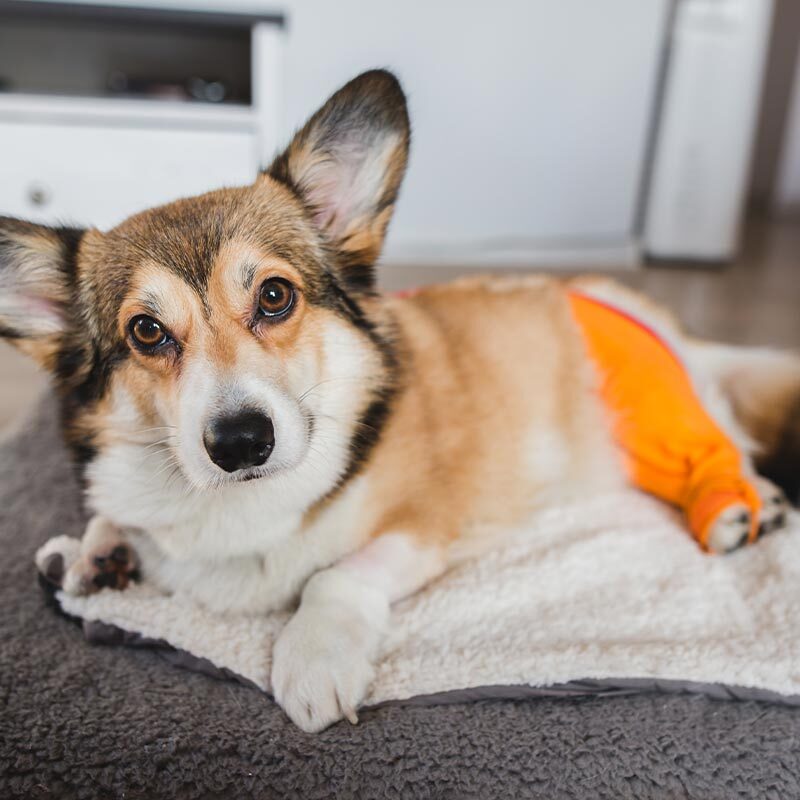
Once the surgery is complete, our team will provide aftercare instructions to help ensure your dog has a smooth recovery. The recovery process for dog TPLO surgery requires patience and close monitoring of your pet’s activity to keep them on the right track. Most dogs begin walking carefully within a few days post-op, and gradually regain full function of the affected leg in a few months. We will also schedule periodic appointments throughout your dog’s recovery so our team can monitor their progress.
Frequently Asked Questions
Most dogs resume normal activities within 8-12 weeks post-surgery.
As with any surgery, risks exist but are minimized through our meticulous surgical protocols. Our team thoroughly assesses your pet’s condition and health prior to the procedure to ensure they are a suitable candidate for TPLO surgery.
Every case is different, but some at-home physical therapy rehabilitation may be recommended.